How to Present A Paradigm
Peter Thiel's 0 to 1 Strategy (Season 1, 2025)

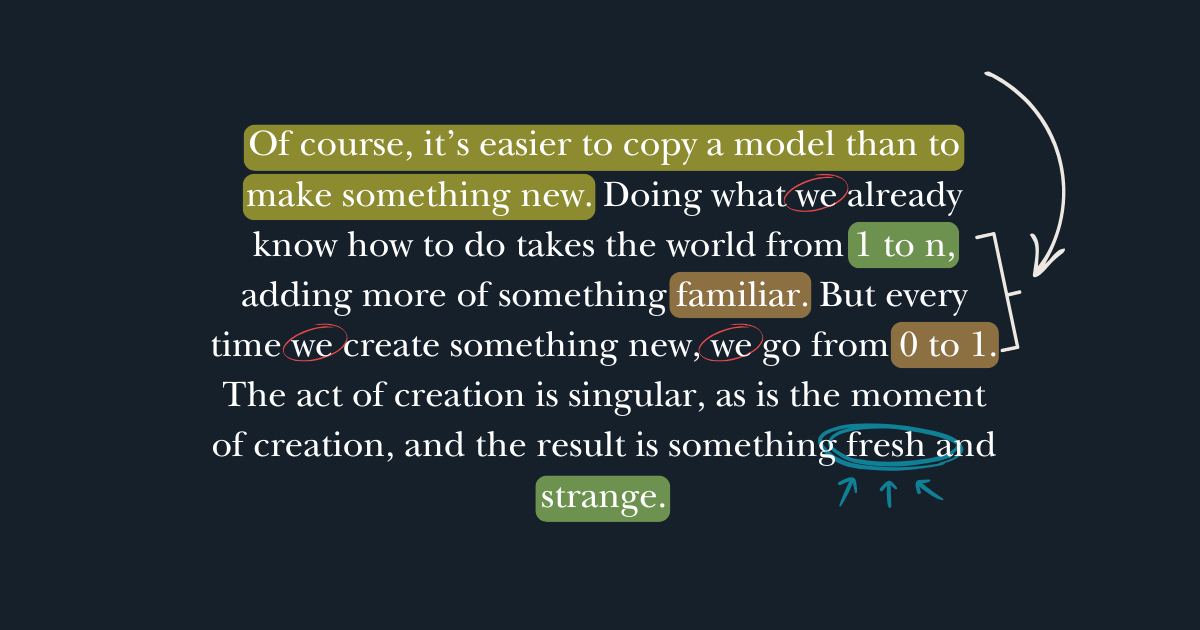
As usual, here is the passage we're analyzing from Peter Thiel with Blake Masters book "Zero to One: Notes on Startups, or How to Build the Future".
Of course, it’s easier to copy a model than to make something new. Doing what we already know how to do takes the world from 1 to n, adding more of something familiar. But every time we create something new, we go from 0 to 1. The act of creation is singular, as is the moment of creation, and the result is something fresh and strange.
Think about what we're doing here. A paradigm is an idea that's going to be in opposition to some well accepted, comfortable, or familiar norm or tradition or way of doing or thinking about things. If we're presenting a paradigm to someone, we don't just want them to considerate it, we want them to take a piece of it in.
When you're ready, join me below. Here's what I came up with.
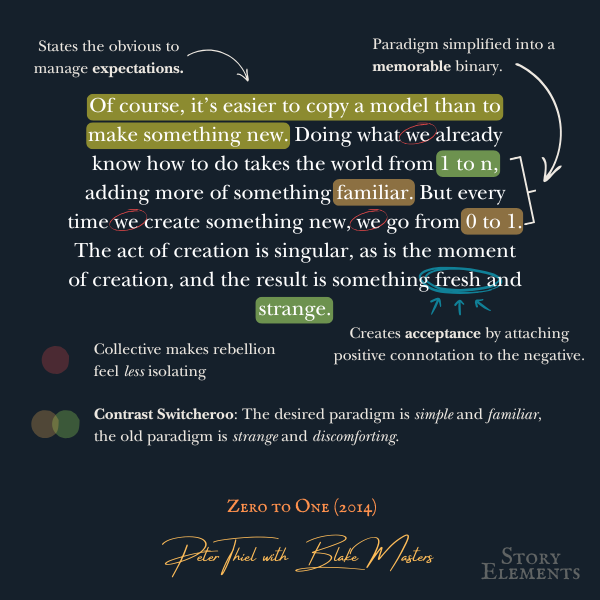
The purpose of a paradigm isn’t just to provoke curiosity or be memorable; its purpose is to be transformative. And for anything to be transformative it needs to prompt action. The trouble is, humans tend to not buck trends that will get them banished from the tribe, while paradigms require you to do just that: rebel.
So, how do you get people to go against what’s popular? Thiel starts by managing these pain points. How? By stating the truth.
‘Of course, it’s easier to copy a model than to make something new.’
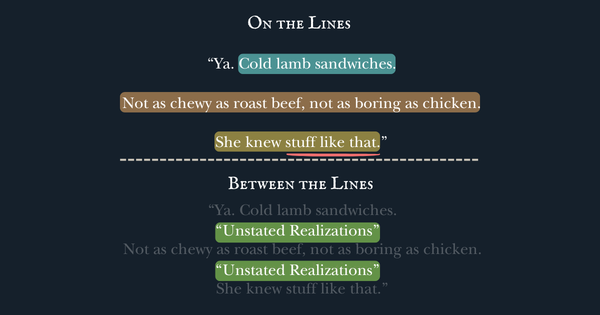
But notice what he leaves out? Yes, he states the truth, but he never says the words the reader dreads: that making something new is hard. By leaving it between the lines, the reader gets what he is saying without being forced to dwell on it.
But difficulty isn’t the only hurdle. The truth is that people don’t just resist hard things; they resist being the only ones doing them. So what’s Thiel do? He uses collective language to make the act of rebellion feel less isolating and consequently, more appealing.
‘We create something new. We go from 0 to 1.’
Suddenly, leaving the tribe doesn’t feel like exile. It feels like discovery.
Next, Thiel works the same magic on the paradigm itself.
Thiel says going from “1 to n” is adding something familiar, yet, there’s nothing familiar about it. Its meaning isn’t intuitive. In fact, unless you’re a math junkie, it’s outright strange and it actually makes “adding something familiar” feel alien.
But “0 to 1”? It’s not just the more familiar term, it’s also the result of something fresh and strange. This strategic pairing softens the impact and eases creators and investors into the idea of embracing strangeness by reframing it as something positive, exciting, and full of potential rather than negative, alien, and threatening.
It’s the old Contrast Switcheroo. And the outcome? Less desire to be a ‘Nah, me eat meat raw!’ kind of tribesman, and more of a ‘Okay, but what if we cooked the meat first?’ kind of tribesman.
So, when you present your paradigm, start by managing the pain points. Make rebellion feel familiar, fresh, and invigorating. And write so that the leap from “0 to 1” feels less like choking down raw deer liver and more like savoring a perfect filet mignon. Do this and your readers will wonder why they didn’t leave the tribe sooner.